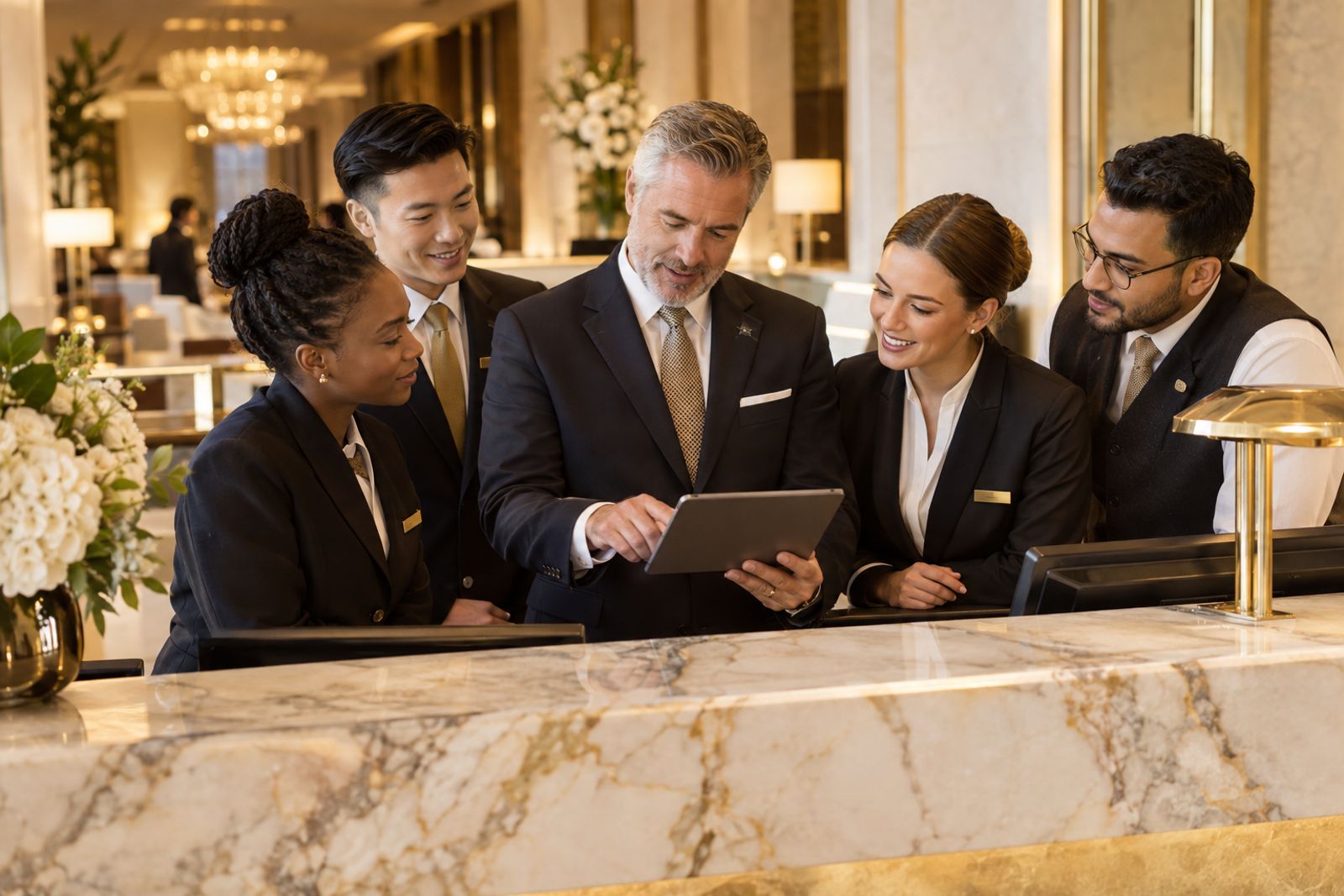
Improving guest experience in a hotel requires identifying and addressing the gaps between what guests actually feel and what leadership assumes they feel. The most impactful improvements are rarely the most expensive — they happen at the transitions: check-in, first impression of the room, response to service failures, and departure.
The Real Reason Most Hotel Improvement Efforts Fail
Every year, hotel leadership teams invest in new amenities, renovation projects, and service training programs. And every year, guest satisfaction scores plateau or decline.
The problem isn’t investment. It’s diagnosis.
Most hotel improvement efforts are designed to fix what leadership thinks is wrong, based on operational data they already have access to. Occupancy trends. RevPAR. Online review scores filtered through a third-party aggregator. The picture is filtered, delayed, and incomplete.
Meanwhile, the actual guest experience — what people feel in real time, what makes them never come back, what they tell their friends — lives in the spaces that don’t show up on dashboards.
The path to real improvement starts with seeing what guests actually see.
Why the Visible Gaps Aren’t the Real Gaps
Here’s something most leadership teams don’t want to hear: the problems your guests complain about publicly are often not the problems that cost you repeat business.
Guests complain publicly about the things that feel safe to complain about — WiFi speeds, noise, parking. They don’t leave reviews about the front desk agent who didn’t make eye contact, the housekeeper who avoided them in the hallway, or the manager who came to their table but clearly didn’t want to be there. Those things don’t show up in the data. They show up in the decision to book somewhere else next time.
The THC Guest Experience Audit
The THC Guest Experience Audit is a five-step framework for systematically identifying the invisible gaps in your hotel’s guest experience — the ones that aren’t in your reviews but are absolutely in your guests’ memories.
Step 1: Walk Your Property as a Guest
Check in to your own hotel anonymously if you can, or walk through every touchpoint as if you’re arriving for the first time. What do you smell? What’s the first face that greets you? How long does it take before someone acknowledges your presence? What does the elevator look like at 9 PM?
Most hotel leaders haven’t genuinely experienced their own property as a guest in years. This step will tell you more than six months of review data.
Step 2: Map the Emotional Journey
List every interaction point a guest has from the moment they arrive to the moment they leave. Not the physical touchpoints — the emotional ones. When do guests feel welcomed? When do they feel uncertain or ignored? When do they feel like a valued guest versus a room number?
Map the emotional high points and the emotional valleys. The valleys are your priorities. Guest experience improvement is largely the work of filling in valleys, not creating new peaks.
Step 3: Interview Your Front-Line Team
Your housekeepers, front desk agents, and restaurant servers know things you don’t. They see every interaction. They hear the comments guests don’t leave in reviews. They know which areas of the property generate complaints that never escalate.
Ask them: “What do you notice guests struggling with that we never seem to address?” The answers will be illuminating and sometimes humbling.
Step 4: Audit Your Service Recovery Process
How your hotel responds to problems is more important to guest loyalty than whether problems occur in the first place. Research consistently shows that guests who experience a well-handled service failure have higher loyalty than guests who never experienced a problem at all.
Walk through your current service recovery process: How does a guest report a problem? Who hears it? How fast does the response happen? Who follows up to confirm resolution? Most hotels have a process for escalation. Very few have a process for genuine recovery.
Step 5: Measure What You’re Not Currently Measuring
Guest satisfaction scores measure the past. Net Promoter Score measures the present. But neither tells you what’s driving the numbers.
Add one question to every post-stay survey: “What is the one thing we could have done differently that would have made your stay better?” The responses to this question will surface specific, actionable gaps that no other data source will reveal.
The Highest-Leverage Improvements
Based on working with hospitality leaders across the country, the improvements that move the needle most consistently are:
The first 90 seconds of check-in. This single window sets the emotional tone for the entire stay. Train your front desk team to acknowledge every guest within 30 seconds of approach, make genuine eye contact, use the guest’s name, and express specific welcome — not “welcome to the hotel,” but something that communicates you’re glad this person is here.
Consistency in room readiness. Guests will forgive a lot. They won’t forgive walking into a room that doesn’t match what they were promised. Audit your room readiness process ruthlessly — not for compliance, but for consistency.
Response time to service requests. The standard for response time in hospitality has compressed dramatically in recent years. Guests who text or call with a request expect acknowledgment within five minutes and resolution within 20. If your response time is longer, it shows up in the emotional memory of the stay regardless of how good everything else is.
The departure experience. Most hotels treat checkout as an operational transaction. The best hotels treat it as a relationship moment — the last thing guests will remember. Train your team to close the guest relationship warmly, not just efficiently.
Final thought
Guest experience is not improved by adding amenities. It’s improved by getting honest about what’s actually happening in the spaces leadership doesn’t see every day.
If you’re ready to stop guessing and start building a systematic approach to guest experience, The Hospitality Conference brings together the leaders who are doing this work at the highest level. Better Leaders. Stronger Teams. Unforgettable Guest Experiences.
Frequently asked questions
How can hotels improve the guest experience?
Hotels can improve guest experience by mapping the emotional journey guests actually have — not the operational process staff execute — and identifying the valleys where guests feel uncertain, ignored, or undervalued. The highest-leverage improvements typically happen at arrival, service recovery, and departure.
What do hotel guests complain about most?
Guests most commonly complain publicly about WiFi, noise, parking, and room cleanliness. However, the experiences that most commonly drive guests not to return are subtler: lack of acknowledgment, impersonal service, and service failures that weren’t handled well.
What is guest experience in hospitality?
Guest experience is the cumulative emotional impression a guest forms across every interaction with your property — from the moment they arrive to the moment they leave, and including every digital and physical touchpoint in between. It’s not a department; it’s the output of your entire operation.
How do you measure guest experience in a hotel?
Guest experience can be measured through post-stay surveys, Net Promoter Score, online review analysis, and direct team interviews. The most overlooked measurement source is qualitative feedback from front-line staff who observe guest reactions that never make it into formal channels.
What is the most important part of the hotel guest experience?
Research and practitioner experience consistently point to arrival and service recovery as the two highest-leverage moments. A strong arrival sets the emotional tone for the entire stay; a strong service recovery can turn a problem into a loyalty-building opportunity.

Greg Atkinson
Greg Atkinson is the Founder of The Hospitality Conference, the First Impressions Conference, and SpeakerSync. He has spent more than three decades helping leaders create welcoming, unforgettable guest experiences.