In hospitality, you have approximately 60 seconds from the moment a guest arrives to establish the emotional tone for their entire experience. Most hospitality brands don’t have a deliberate system for this window — they leave it to chance, personality, or incomplete training. The brands that win consistently have made the first 60 seconds a discipline, not an afterthought.
The Window Most Brands Are Wasting
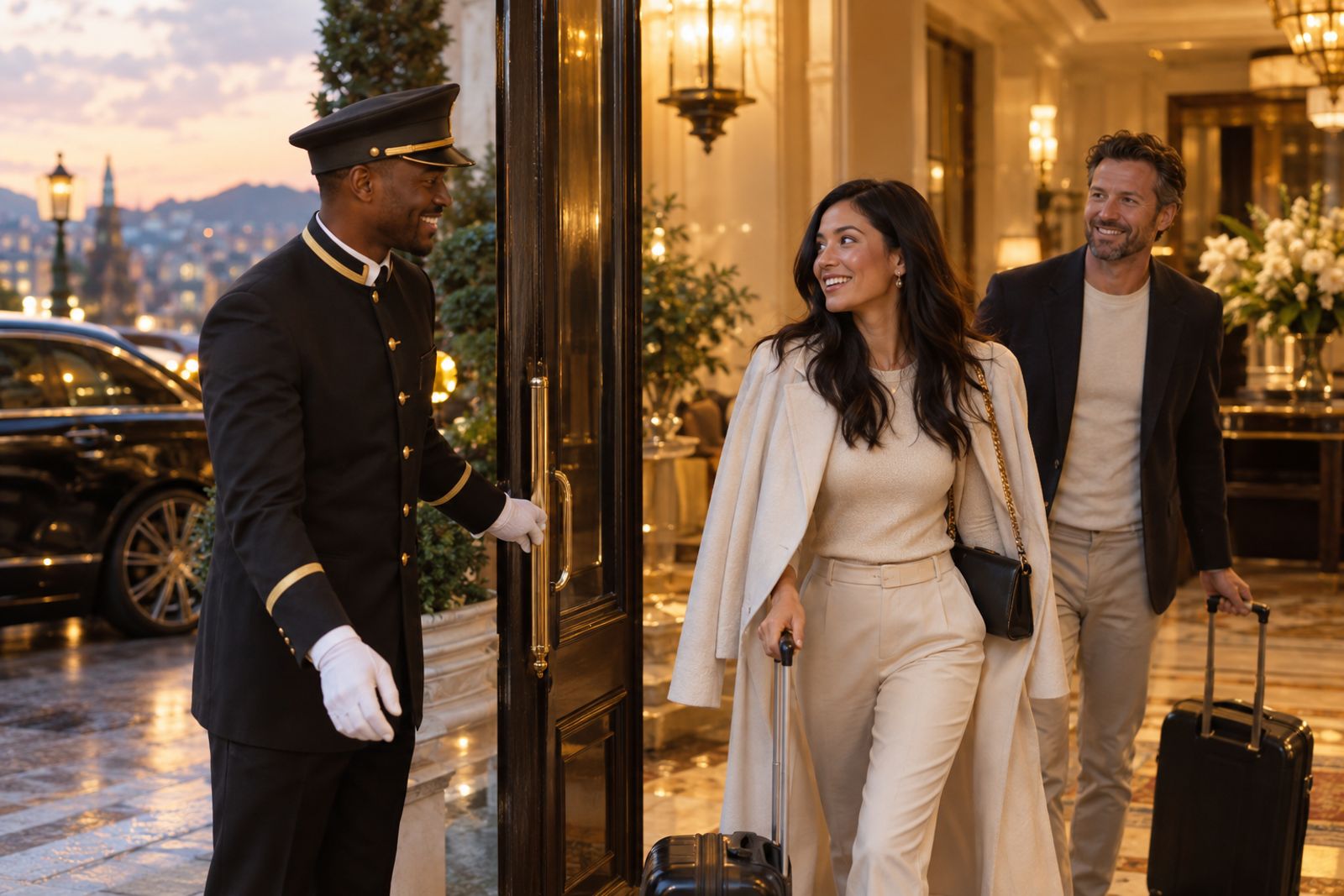
Behavioral research on first impressions shows that humans form stable emotional judgments within seconds of meeting another person. In a hospitality context, guests are forming those judgments not just about a person — but about your entire brand.
By the time a guest has been in your lobby for 60 seconds, they’ve already decided: Is this place going to take care of me? Do the people here care that I’m here? Did I make the right choice?
These are not conscious decisions. They’re emotional, rapid, and remarkably sticky. The guest who feels welcomed in the first 60 seconds will interpret the rest of their experience through a positive lens — small imperfections become charming; small successes become confirmations. The guest who feels overlooked in the first 60 seconds will interpret the rest through a negative lens, looking for evidence they were right to be skeptical.
The first 60 seconds isn’t just the start of the experience. It’s the frame through which everything else gets evaluated.
Why Most Hospitality Brands Don’t Win This Window
There are three reasons most operations leave value on the table in the first impression window.
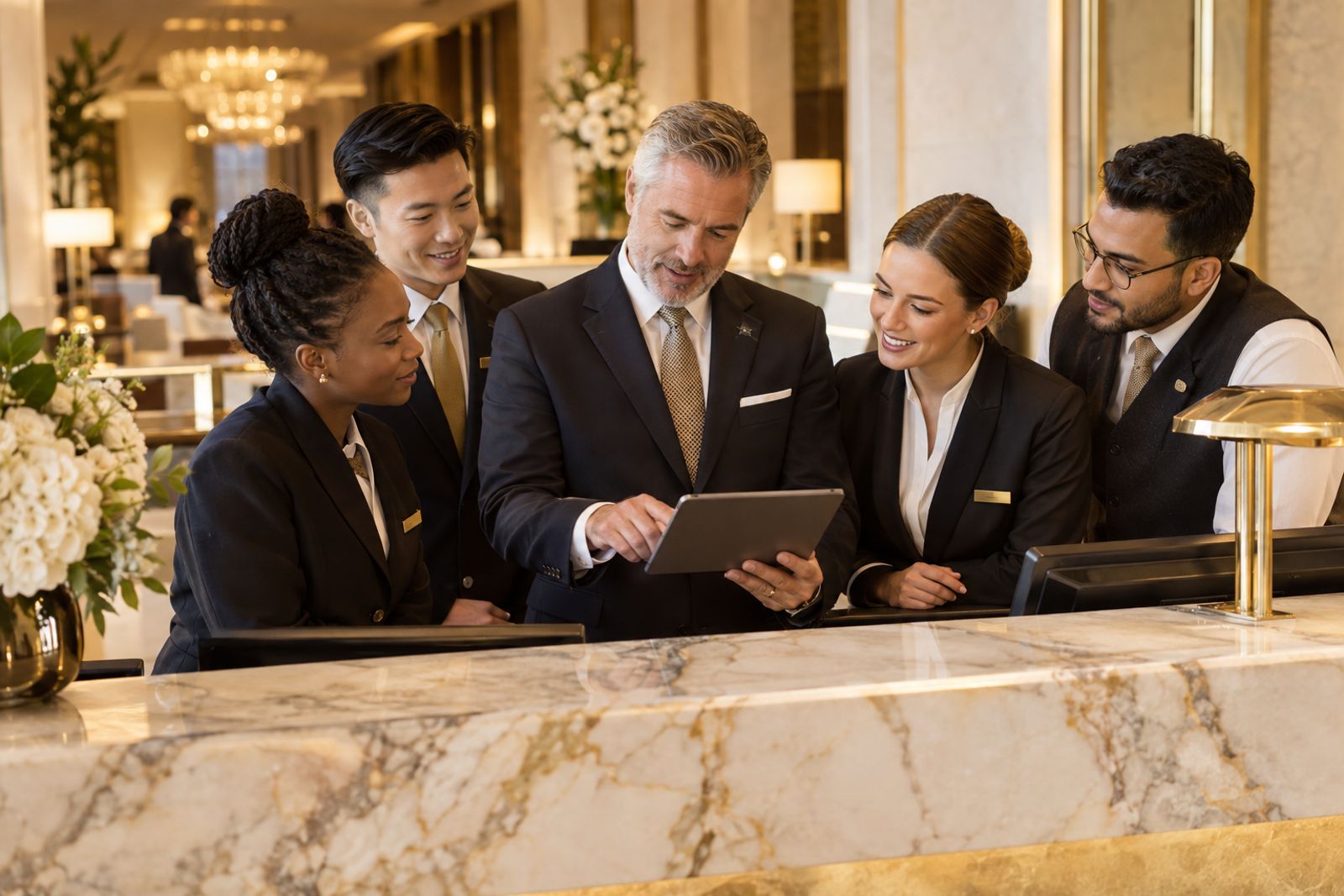
First, they’ve outsourced the moment to whoever is working the door that day. The first impression is treated as a personality-dependent function rather than a disciplined system. If the front desk agent is naturally warm and confident, guests get a great first 60 seconds. If they’re distracted, tired, or undertrained, guests don’t. There’s no standard and no accountability.
Second, they’re measuring the wrong things. Most hotels track check-in efficiency — time to room, queue length, speed of transaction. These are operational metrics. Guests care about emotional metrics — did I feel welcomed, seen, and anticipated? These don’t show up on the operational dashboard.
Third, they believe the physical space does the work. A beautiful lobby, impressive architecture, and impeccable design absolutely contribute to the first impression. But guests don’t remember spaces — they remember people. The most gorgeous hotel lobby in the world can’t overcome a front desk team that makes guests feel like a burden.
The 60-Second Window: THC’s First Impression Framework
The 60-Second Window is THC’s First Impression Framework for designing, training, and consistently delivering the arrival experience that sets the emotional tone for every stay or visit.
The framework operates on five sequential beats that happen within the first 60 seconds of guest contact.
Beat 1: The Acknowledge (0–10 seconds)
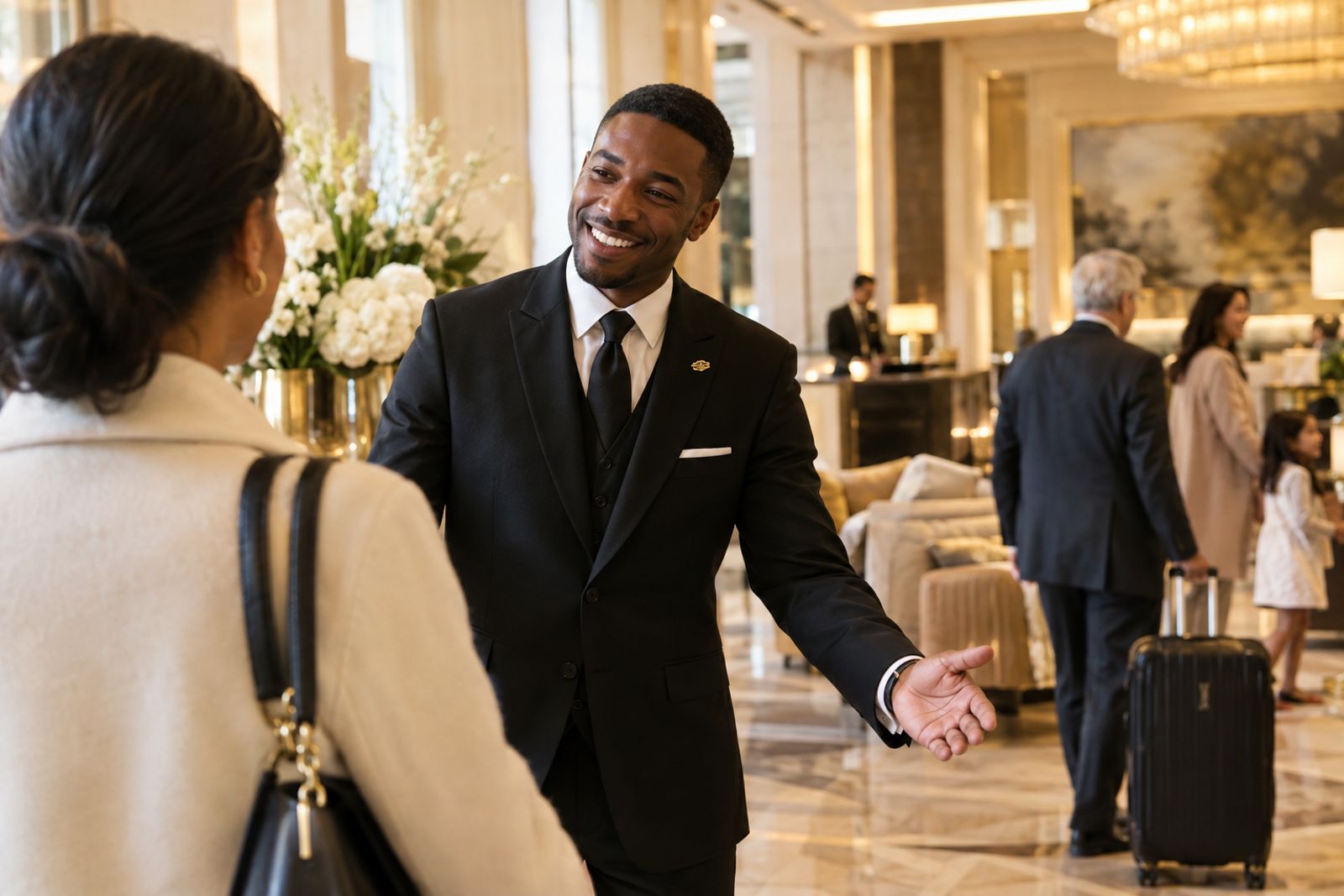
Every guest must be acknowledged within 10 seconds of entering the building or approaching the desk — even if the team member is occupied. This acknowledgment doesn’t have to be verbal at first; eye contact and a genuine nod communicate “I see you and I’ll be right with you” with extraordinary power.
The failure mode here is the occupied staff member who lets a guest stand unacknowledged for 30, 60, or 90 seconds. That is not a neutral experience. That is the emotional equivalent of being invisible, and guests don’t quickly forgive it.
Beat 2: The Welcome (10–20 seconds)
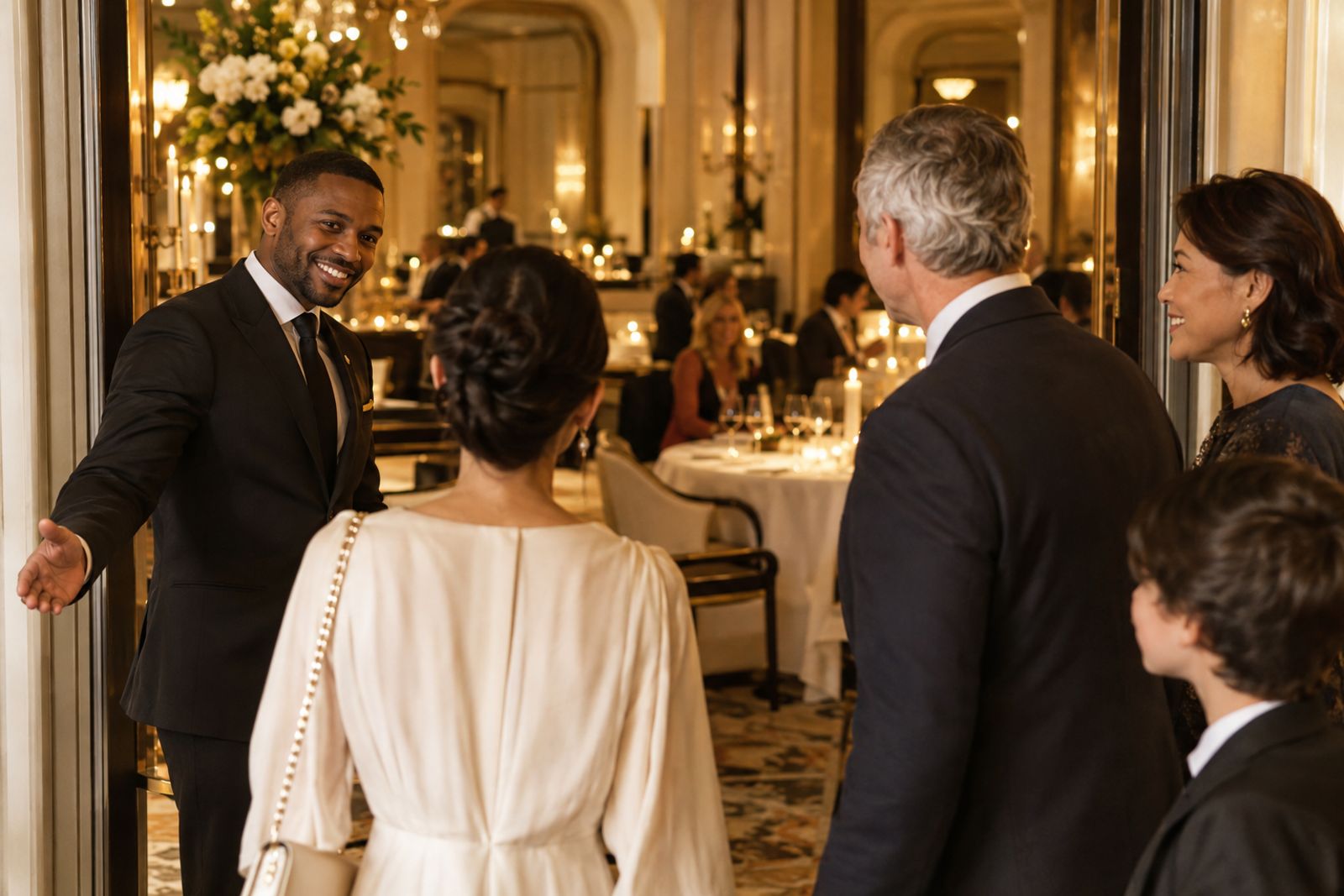
The first verbal contact sets the emotional register for the entire interaction. A rote script (“Welcome to [hotel name], checking in?”) communicates efficiency. A genuine welcome (“Welcome — I’m glad you made it”) communicates warmth.
Train your team on the intent of the welcome, not just the words. The intent is: this person just walked in, and our job is to make sure they know their arrival matters.
Beat 3: The Name (20–35 seconds)
Using a guest’s name — authentically, not mechanically — shifts the interaction from transactional to personal. In a check-in context, this happens naturally when reviewing the reservation. In a restaurant or other context, it may require a brief introduction exchange.
The power of the name isn’t the name itself. It’s what the name communicates: “You are a specific person to us, not a room number.”
Beat 4: The Anticipation (35–50 seconds)
The best first impressions include a moment of proactive anticipation — something the team member says or does that demonstrates they’ve thought ahead on the guest’s behalf. “I have you in a corner room away from the elevator — I think you’ll love the quiet.” “We’re a bit busy tonight, but I’ve already put in a heads-up to your server.”
This beat is what separates service from hospitality. Service responds to what’s asked. Hospitality anticipates what’s needed.
Beat 5: The Invitation (50–60 seconds)
Every first impression should close with a clear invitation to ask for anything. Not “let me know if you need something” — that’s dismissive. Something that genuinely communicates availability: “Please ask for me directly if anything comes up — I want to make sure this stay is exactly right for you.”
This closes the loop on the welcome and establishes a relationship, not just a transaction.
Making the 60-Second Window a System, Not a Personality
The difference between a brand that consistently wins the first impression and one that wins it 60% of the time is systematization.
That means scripting the intent (not the words) of each beat so every team member understands what they’re trying to achieve. It means observing and coaching on these beats specifically — not just general service quality. It means making the 60-second window a leadership topic in every pre-shift meeting.
The brands that do this work discover that warmth is not a gift some people have and others don’t. It’s a skill that can be developed, practiced, and held to a standard.
Final thought
You have 60 seconds. The brands that take those 60 seconds seriously — that design them, train for them, and hold them to a standard — are the brands that guests return to and recommend.
The Hospitality Conference exists to help you build the systems and culture that make the first impression exceptional, every time. Better Leaders. Stronger Teams. Unforgettable Guest Experiences.
Frequently asked questions
Why are first impressions important in hospitality?
First impressions establish the emotional frame through which guests interpret everything that follows. A strong first impression creates a positive bias that makes guests more forgiving of imperfections; a weak first impression creates a skeptical lens that makes guests look for evidence to confirm their early doubts.
How long does a first impression last in hospitality?
Research suggests that first impressions are formed within the first seconds of contact and remain emotionally stable throughout the experience. In hospitality, the first 60 seconds effectively sets the emotional tone for the entire visit, stay, or meal.
What makes a great first impression in a hotel?
A great hotel first impression requires prompt acknowledgment, a genuinely warm welcome, use of the guest’s name, at least one moment of proactive anticipation, and a clear invitation for the guest to ask for help. The cumulative effect communicates: you are expected, you are valued, and we are here for you.
How do you train hospitality staff on first impressions?
Training for first impressions is most effective when it focuses on the intent of each interaction rather than scripted language, and when it includes regular observation and coaching specifically on arrival behaviors. Role-play, manager modeling, and daily pre-shift discussions about the first impression standard are all effective methods.
What is front-of-house management in hospitality?
Front-of-house management covers the systems, training, staffing, and culture that govern every guest-facing interaction — from arrival to departure. It includes front desk operations, restaurant hosting, concierge service, and any role that serves as the interface between the guest and the operation.

Greg Atkinson
Greg Atkinson is the Founder of The Hospitality Conference, the First Impressions Conference, and SpeakerSync. He has spent more than three decades helping leaders create welcoming, unforgettable guest experiences.