- Guests form a lasting judgment within the first few minutes of arrival, and later service is interpreted through that lens.
- Map every arrival touchpoint — digital, curb, door, greeting, and handoff — and assign an owner to each.
- Use the 10-and-5 rule: acknowledge guests with eye contact at 10 feet and a verbal greeting at 5 feet.
- Script the intent, not the words: train staff on what the guest should feel, then let them speak naturally.
- Measure arrival quality with mystery visits, wait-time tracking, and review keywords like 'welcome' and 'greeted'.
Why do the first five minutes matter so much?
Every guest arrives carrying a question they rarely say out loud: "Was I expected, and am I welcome here?" The first five minutes answer it. Psychologists call the tendency to let an early impression color everything that follows the halo effect. In hospitality, it means a warm arrival earns you grace when the kitchen runs slow, while a cold arrival makes even a perfect entrée feel ordinary.
That is why the arrival is the highest-leverage moment in your operation. It costs almost nothing to improve, it involves every department, and it sets the emotional tone for the entire stay or meal.
Step 1: Map the arrival journey before the guest arrives
Arrival does not start at your front door. It starts the moment a guest begins to think about you. Map each of these touchpoints and write down who owns it:
- The digital doorstep. Your website, Google Business Profile, confirmation email, and reservation reminder. Are directions, parking, and dress code clear? Does the confirmation sound like a person or a system?
- The approach. Signage, lighting, parking, and curb appeal. Walk your own approach at night and in the rain.
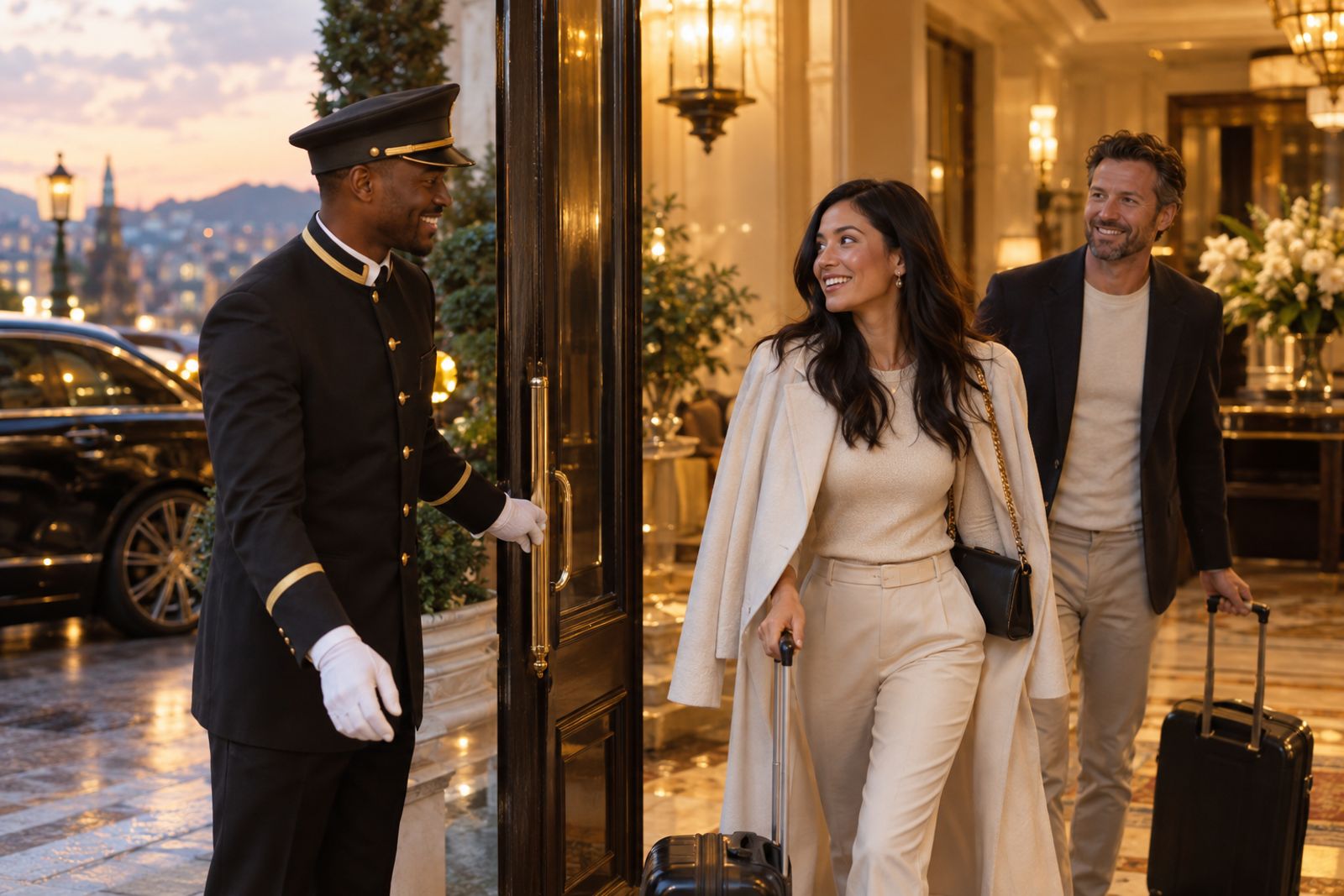
- The threshold. The door, the entry, the scent, the sound level, and the temperature — the sensory "first sip" of your brand.
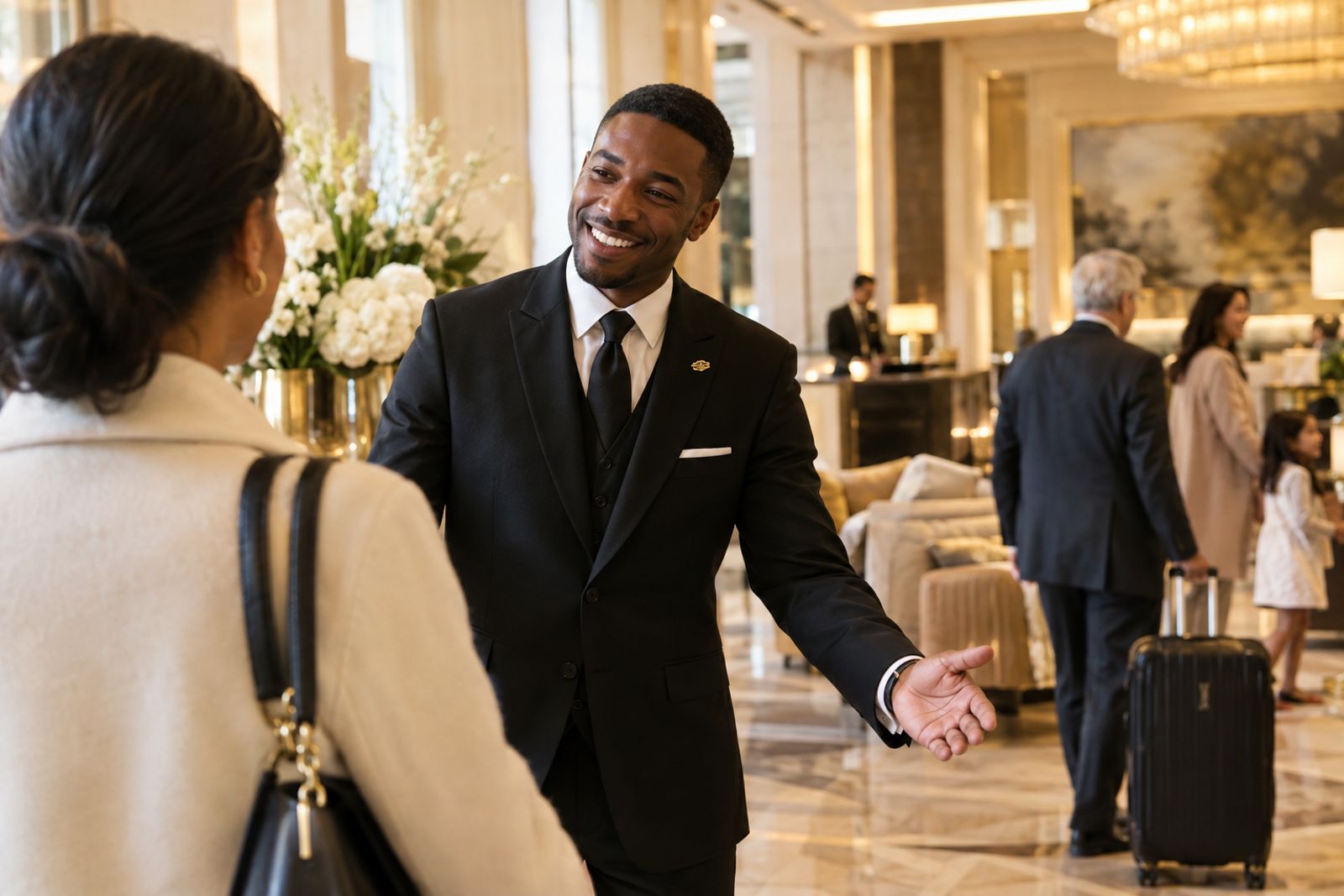
- The greeting. Eye contact, a smile, a verbal welcome, and ideally the guest's name.
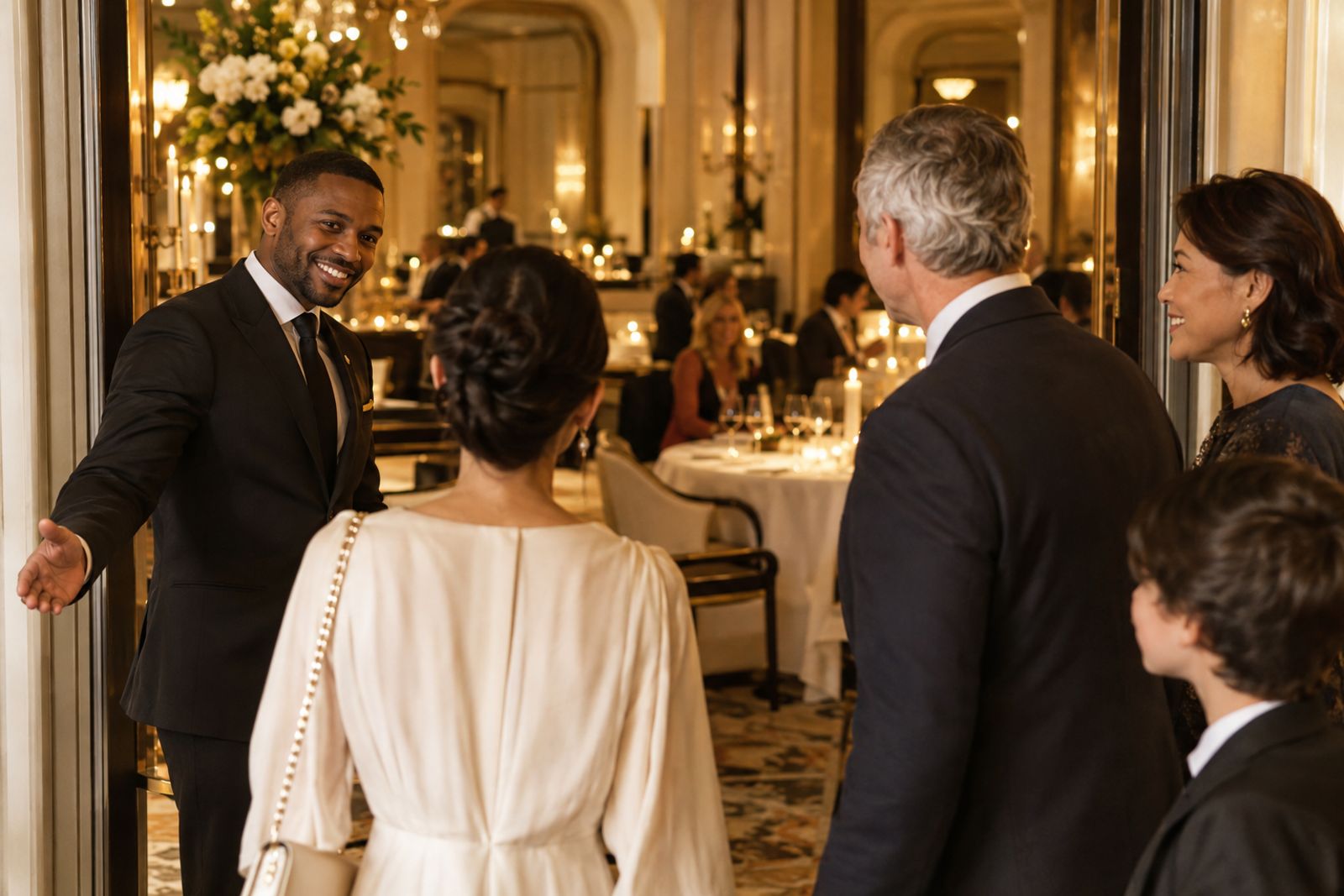
- The handoff. The walk to the table, the elevator, or the room. This is where many operations drop the guest.
For each touchpoint, ask: What should the guest feel here? What could go wrong? Who is responsible?
Step 2: Adopt the 10-and-5 rule
A simple standard used across luxury hotels and restaurants: when a guest comes within 10 feet, make eye contact and smile; within 5 feet, offer a verbal greeting. It removes the guesswork for new team members and guarantees that no guest ever stands unacknowledged — the single most common arrival failure.
If the host is on the phone or with another guest, a raised hand, a nod, and "I'll be right with you" still counts. Acknowledgment is the minimum; ignoring is never acceptable.
Step 3: Script the intent, not the words
Word-for-word scripts make staff sound robotic. Instead, define the intent of each moment and give examples:
- Intent: "Make the guest feel expected." Example: "Good evening, Ms. Carter — we've been looking forward to having you."
- Intent: "Reduce uncertainty." Example: "Your table is ready. Let me walk you over — the patio is lovely tonight."
- Intent: "Signal care." Example: "It's warm out — may I bring you some water while you settle in?"
Role-play these moments at pre-shift meetings. Ten minutes a day of practice outperforms a thick training manual.
Step 4: Use names — carefully
A guest's name is the most personal word you can say. Use reservation data, luggage tags, credit cards at check-in, or simply ask. Use the name once at greeting and once at farewell; more than that begins to feel performative. Share names across the team so the bartender, server, or concierge can continue the thread.
Step 5: Design the wait
Some waiting is inevitable, but unexplained waiting feels longer than explained waiting. Give an honest time estimate, check back before it expires, and fill the gap with something of value: a comfortable place to sit, a glass of water, a menu preview, or a local recommendation. In hotels, pre-registration and room-ready text messages remove the most frustrating arrival wait of all.
Step 6: Perfect the handoff
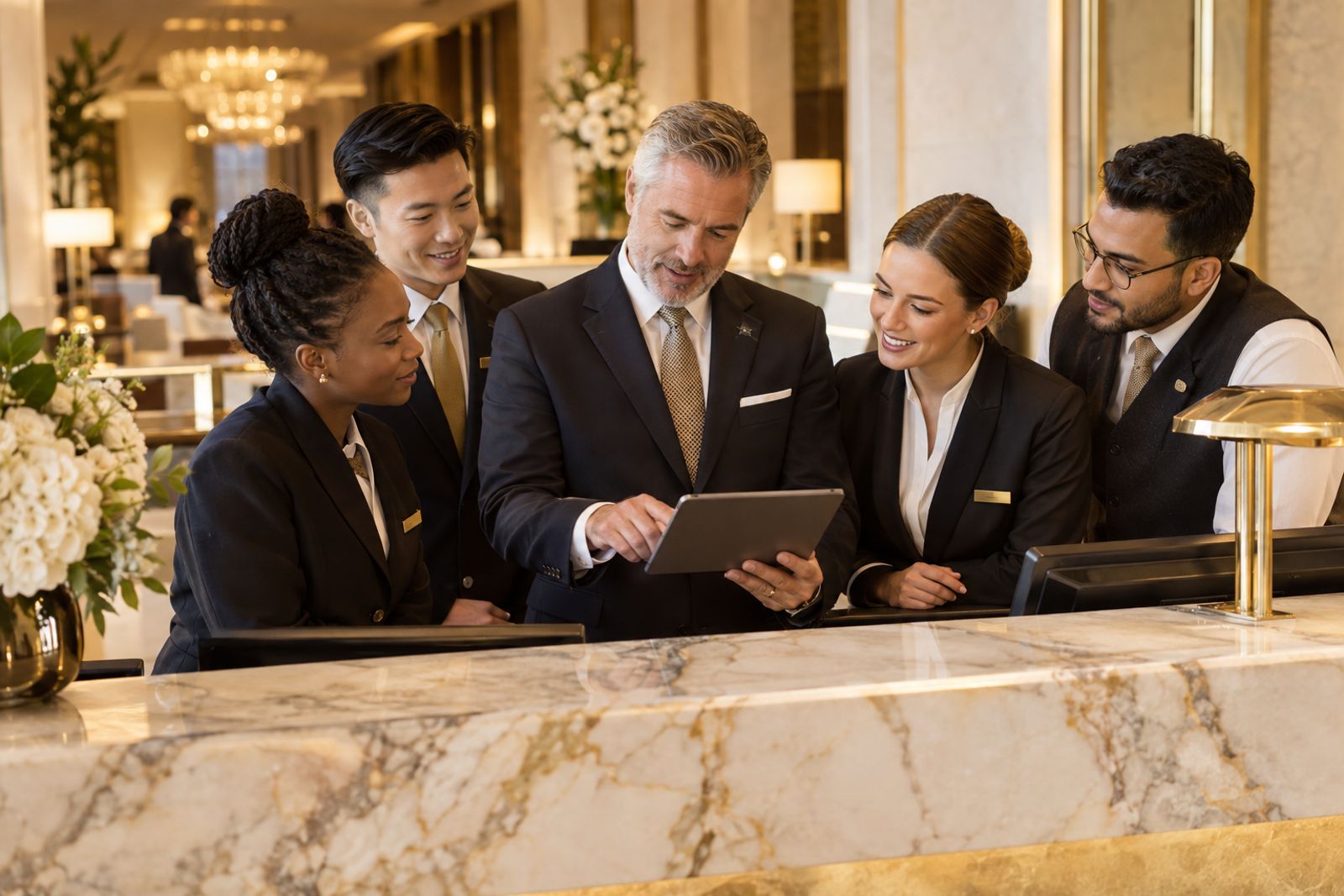
The handoff from host to server, or from front desk to bell staff, is where warmth often leaks away. Build a verbal bridge: "This is Marcus — he'll take wonderful care of you tonight. Marcus, the Carters are celebrating an anniversary." The guest hears that they are known, and the next team member starts with context instead of from zero.
How do you measure the arrival experience?
- Mystery guest visits focused only on the first five minutes.
- Time-to-acknowledge and time-to-seat/check-in, tracked at peak times.
- Review language. Search your reviews for words like "welcomed," "greeted," "ignored," and "waited." Count them monthly.
- Staff self-audits. Ask your team to rate the arrival every week; they often see the problems first.
Arrival experience checklist
- Confirmation messages include parking, directions, and a warm personal line
- Entry is clean, well-lit, comfortably scented, and free of clutter
- Every guest is acknowledged within seconds (10-and-5 rule)
- Names are captured and shared with the team
- Wait times are honest and checked on before they expire
- Every handoff includes an introduction and one piece of guest context
- Arrival quality is measured and discussed weekly
The arrival is where hospitality becomes visible. Design it with the same care you give your menu or your rooms, and your guests will feel the difference before they ever take a bite or turn a key.
Frequently asked questions
What is the 10-and-5 rule in hospitality?
The 10-and-5 rule is a service standard: acknowledge a guest with eye contact and a smile when they are within 10 feet, and offer a verbal greeting when they are within 5 feet. It ensures no guest goes unacknowledged.
How long does a guest take to form a first impression?
Guests form an initial impression within seconds and a lasting judgment within the first few minutes of arrival. That early judgment shapes how they interpret the rest of the experience.
How can a restaurant improve its guest arrival experience?
Map every touchpoint from the confirmation message to the table, acknowledge every guest immediately, use names, give honest wait estimates, and build a warm verbal handoff from host to server.

Greg Atkinson
Greg Atkinson is the Founder of The Hospitality Conference, the First Impressions Conference, and SpeakerSync. He has spent more than three decades helping leaders create welcoming, unforgettable guest experiences.