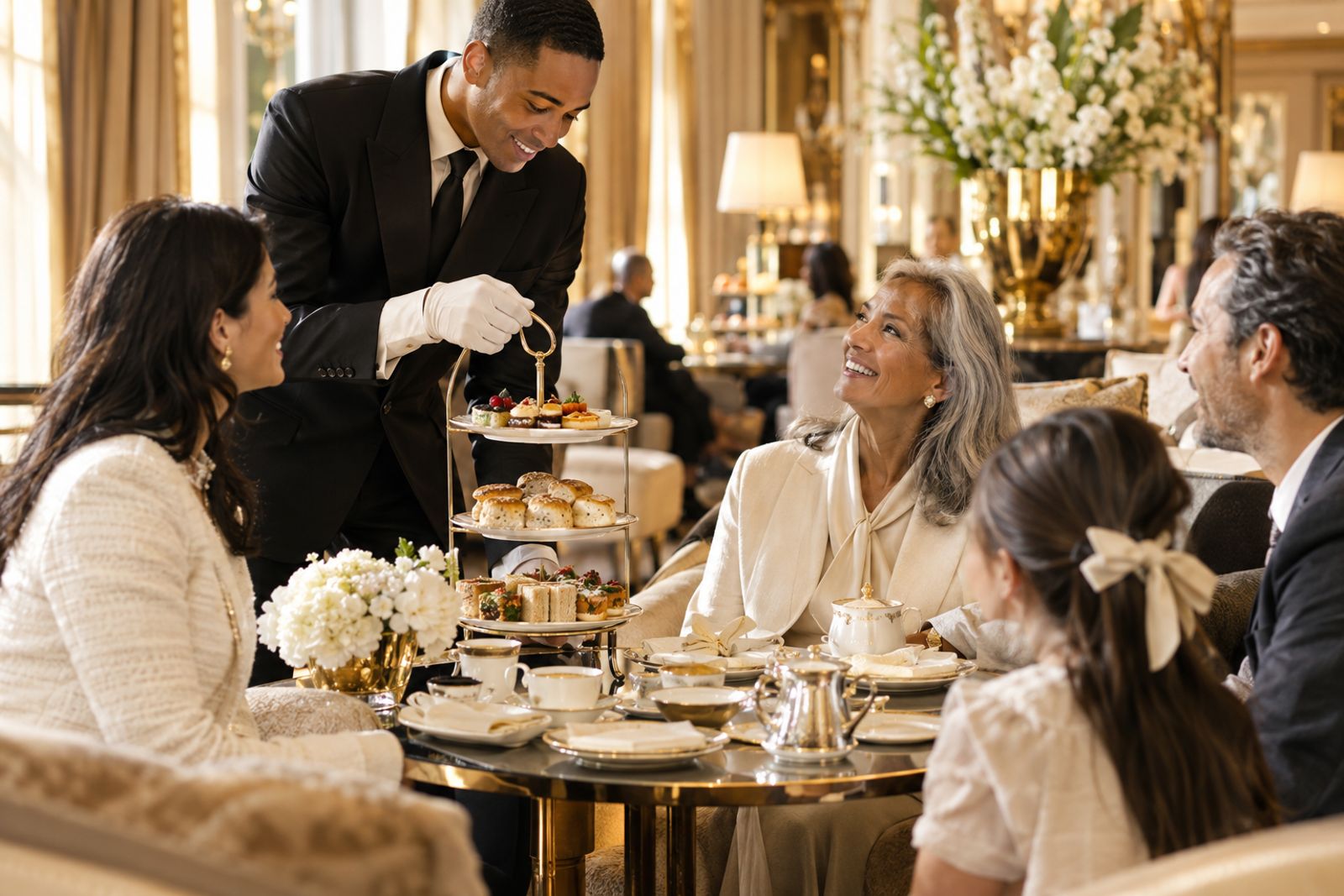
The Ritz-Carlton’s legendary service standards are not magic — they are a deliberately designed system of culture, language, empowerment, and consistency that any hospitality operation can adapt and apply. The principles behind the Gold Standard are more transferable than most leaders realize, and they work at any price point.
The Myth of the Unreplicable Standard
The most common response when hospitality leaders encounter the Ritz-Carlton model is: “That’s great for a luxury brand, but it doesn’t apply to us.”
This is the most expensive mistake in the industry.
The Ritz-Carlton’s service standards are not primarily a function of budget, real estate, or guest demographics. They are a function of culture — specifically, a culture built on clear values, daily rituals, genuine empowerment, and relentless consistency. These elements don’t require a five-star property. They require leadership commitment and execution discipline.
The brands that dismiss the Ritz-Carlton model as irrelevant to their context are usually the ones that most need what it offers.
The Gold Standard Principles
The Gold Standard Principles is THC’s distillation of what makes the Ritz-Carlton service model replicable — the 10 lessons that translate across property types, price points, and operational contexts.
Lesson 1: Start With a Credo, Not a Policy Manual
The Ritz-Carlton’s service philosophy begins with a Credo — a statement of purpose that every “Lady and Gentleman” (their term for all employees) carries on a laminated card and can recite. “We are Ladies and Gentlemen serving Ladies and Gentlemen.”
The power isn’t the words. The power is that there are words — a shared identity that everyone on the team understands and can reference. Most hospitality operations have a policy manual. Very few have a credo. The credo is what gives the policy meaning.
Write a one-paragraph statement of what your operation exists to do and who your team is in service of that mission. Make it real, specific, and worth memorizing.
Lesson 2: Daily Lineups Are Culture Maintenance
Ritz-Carlton properties hold daily lineups — brief pre-shift meetings where the team reviews a “WOW story” (a guest experience worth celebrating), discusses one of the hotel’s service values, and reconnects to the team’s shared purpose.
This isn’t a scheduling meeting. It’s a culture maintenance ritual. Ten minutes a day, every day, of reinforcing what matters.
Institute a pre-shift ritual that is explicitly cultural, not just operational. Pick one value, one story, or one guest feedback item to discuss every single day.
Lesson 3: Language Is a Policy
The Ritz-Carlton prohibits certain phrases — “no problem,” “you’re welcome,” “I don’t know” — not because they’re rude, but because they signal the wrong values. “My pleasure” (yes, the same phrase Chick-fil-A uses) replaced “you’re welcome” because “my pleasure” communicates privilege rather than debt.
Language shapes culture. The words your team uses every day communicate what the organization believes about its relationship with guests.
Conduct a language audit. What phrases does your team use that subtly communicate the wrong values? What phrases could replace them?
Lesson 4: Empowerment Is Non-Negotiable
The famous $2,000 empowerment policy — the authority every Ritz-Carlton employee has to resolve a guest problem without management approval — is not a financial policy. It’s a philosophy: the person closest to the guest is the most important person in the resolution chain.
Define clearly what your front-line team is empowered to do — and make the list as long as you can make it without creating operational chaos. Then tell your team explicitly that you trust them to use this authority.
Lesson 5: Never Lose a Guest — Three Steps of Service
The Ritz-Carlton’s Three Steps of Service — a warm welcome using the guest’s name, anticipation and fulfillment of each guest’s needs, and a fond farewell using the guest’s name — is a simple framework that any team can learn and execute.
The power is the consistency. Every guest, every interaction, every time.
Define your own version of the three steps. Make it specific to your context and your culture. Then train it until it’s automatic.
Lesson 6: Hire for Values, Train for Skills
The Ritz-Carlton does not hire primarily for technical skill. They hire for genuine warmth, care, and values alignment — and then train the technical skills. The belief is that technical skills are teachable; genuine caring is not.
Redesign your interview process to probe for values and character before skills. Ask behavioral questions that reveal how candidates treat other people when no one is evaluating them.
Lesson 7: Mistakes Are Learning Events, Not Disciplinary Events
The Ritz-Carlton’s service recovery process treats guest complaints and service failures as learning opportunities, not performance failures. The focus is on recovery and improvement, not blame.
This creates a culture where team members are willing to surface problems early — before they escalate — rather than hiding them to avoid consequences.
Evaluate your own response to service failures. Does your team bring problems to you early because they trust the response will be constructive? Or do problems get buried because the consequences feel punitive?
Lesson 8: Consistency Beats Brilliance
The Ritz-Carlton doesn’t seek brilliant one-off experiences. They seek consistent excellent experiences. Their systems, training, and daily rituals are all designed to eliminate the variance between a good day and a bad day.
Identify the five interactions that happen with every guest. Set a specific standard for each. Measure your consistency, not just your average.
Lesson 9: The Basics Are Sacred
No matter how sophisticated the guest experience design gets at the Ritz-Carlton, the basics are never allowed to slip: cleanliness, accuracy, speed, and reliability. The luxury is layered on top of a foundation of operational excellence — not in lieu of it.
Audit your fundamentals before investing in elevated experiences. A beautiful check-in ritual can’t compensate for a dirty room.
Lesson 10: Leadership Must Live the Standard
In every Ritz-Carlton property, leadership is visible — on the floor, greeting guests, working alongside the team. The standard isn’t just proclaimed from an office; it’s demonstrated in every interaction leaders have.
Commit to a visible presence in your operation that models the exact standard you expect. Not to inspect, but to embody.
Final thought
The Ritz-Carlton built its standard through cultural commitment, not budget. The principles behind that standard are available to every hospitality leader willing to do the work.
The Hospitality Conference exists to help you translate world-class principles into actionable systems for your operation. Better Leaders. Stronger Teams. Unforgettable Guest Experiences.
Frequently asked questions
What are the Ritz-Carlton service standards?
The Ritz-Carlton’s service standards, known as the Gold Standards, include a Credo, a Service Values framework, an employee promise, and Three Steps of Service. They are built on the philosophy that employees are Ladies and Gentlemen serving Ladies and Gentlemen — a positioning that elevates both the team and the guest.
Can small hotels apply Ritz-Carlton service principles?
Absolutely. The core principles — daily culture rituals, clear values, employee empowerment, and consistent three-step service — are independent of property size or price point. In fact, smaller properties often find these principles easier to implement because culture is easier to maintain at lower headcounts.
What is the Ritz-Carlton $2,000 rule?
The Ritz-Carlton empowers every employee to spend up to $2,000 per incident — without management approval — to resolve a guest issue. This policy signals that every team member is trusted and empowered to do whatever it takes to make a guest feel valued.
How does the Ritz-Carlton train its employees?
Ritz-Carlton training is built around values alignment, daily service value reinforcement through lineups, and language standards. New employees receive significant culture orientation before any technical training — the philosophy precedes the procedure.
What is the Ritz-Carlton Credo?
The Ritz-Carlton Credo states that the hotel is “a place where the genuine care and comfort of our guests is our highest mission,” and that the hotel “pledges to provide the finest personal service and facilities for our guests who will always enjoy a warm, relaxed, yet refined ambience.” It is carried by every employee on a laminated card.

Greg Atkinson
Greg Atkinson is the Founder of The Hospitality Conference, the First Impressions Conference, and SpeakerSync. He has spent more than three decades helping leaders create welcoming, unforgettable guest experiences.