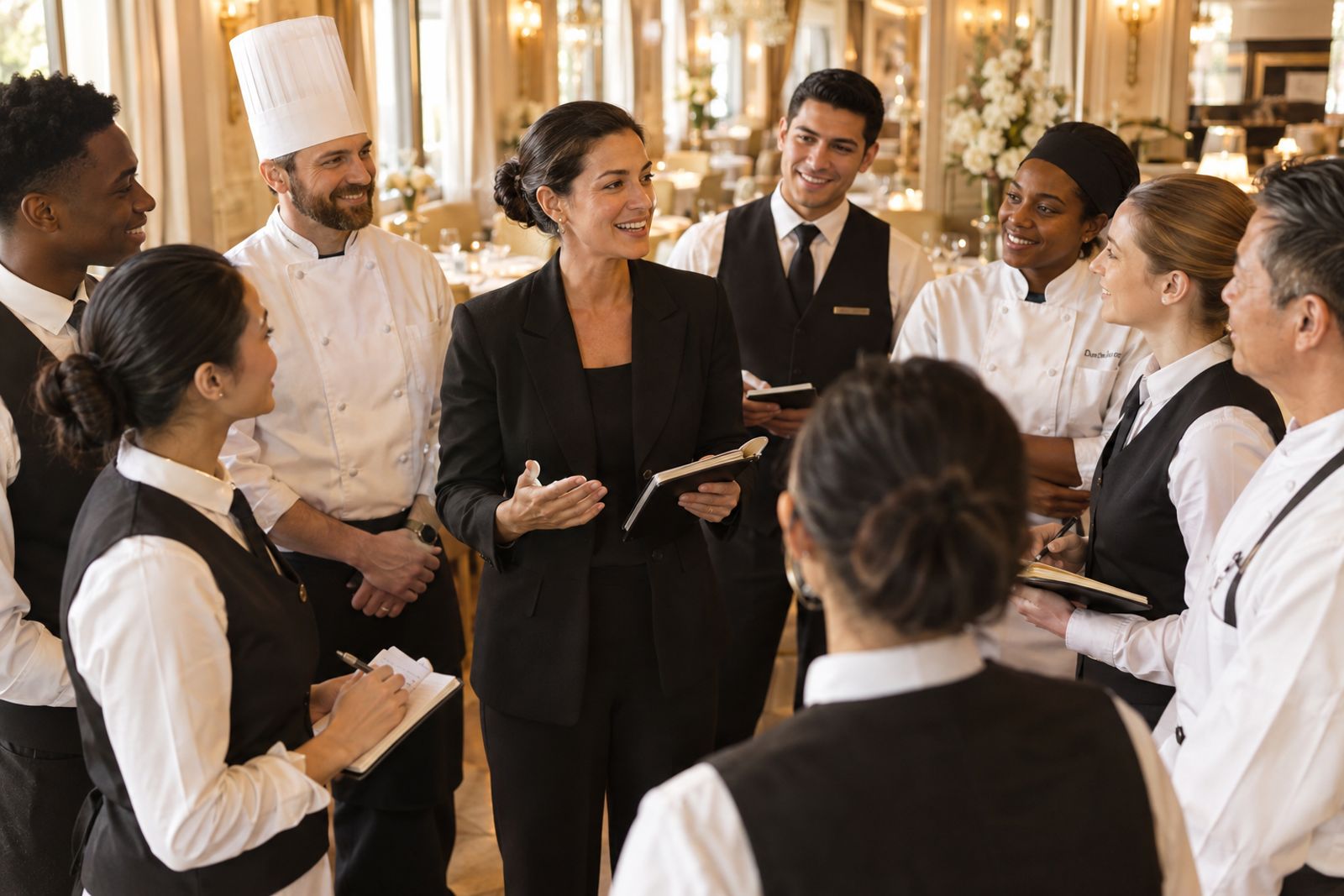
A great pre-shift meeting (also called a lineup or huddle) is a focused 10-minute gathering before every shift that aligns the team on the day's details, reinforces one service value, and sends people onto the floor energized. The best operations treat it as a daily culture ritual, not an announcement session.
Why the Pre-Shift Meeting Matters More Than You Think
Most hospitality teams already hold some kind of pre-shift meeting. The problem is what happens in it. Too often it becomes a list of 86'd items, a reminder about side work, and a few rushed words before the doors open. The team leaves informed but not inspired.
The pre-shift meeting is the only moment every day when the entire team is in one place, focused on the same thing, before the first guest arrives. That makes it the single most valuable ten minutes you have to shape how your guests will feel.
The 10-Minute Pre-Shift Template
Use this structure every day. Consistency is the point: when the format is predictable, the team can focus on the content.
Minutes 1–2: The Welcome
Start on time, make eye contact, and greet the team the way you want them to greet guests. Welcome back anyone returning from time off and introduce new team members by name. The tone you set here becomes the tone on the floor.
Minutes 3–4: The Business of Today
Cover only what the team needs to know for this shift: reservations and occupancy, VIPs and special occasions, large parties or groups, menu changes, 86'd items, and any known issues such as a broken elevator or short-staffed station. Keep it brief and write it on a board so no one has to memorize it.
Minutes 5–6: The Guests We're Expecting
Name the guests who matter today — the anniversary at table twelve, the returning family in room 410, the guest with a severe allergy. When the whole team knows the story, anyone can deliver recognition, not just the person assigned.
Share at least one guest detail per shift that allows the team to personalize service. Over time, this habit builds a culture where noticing guests becomes second nature.
Minutes 7–8: One Value, One Story
Choose one service value or standard and bring it to life with a real story — ideally a recent example from your own team. "Yesterday, Maria noticed a guest shivering on the patio and brought a blanket before she asked." Stories teach far better than rules, and recognizing a team member in front of peers is one of the strongest motivators in hospitality.
Minutes 9–10: Practice and Send-Off
End with a quick role-play, a wine or menu tasting, or a 30-second drill on a tricky scenario: a guest whose room isn't ready, a dish sent back, a wait longer than quoted. Then close with energy — a clear, confident send-off that tells the team, "We're ready."
Common Pre-Shift Mistakes to Avoid
- Running long. Ten focused minutes beats thirty scattered ones. Respect the team's time and they will respect the meeting.
- Only delivering bad news. If every lineup is a list of complaints, people start to dread it. Balance correction with recognition.
- Talking at people. Ask questions. Invite team members to share a guest story or lead the value of the day.
- Skipping it when busy. The busiest shifts are exactly when alignment matters most. Shorten it if you must, but never skip it.
- Making it manager-only. Rotate leadership of the meeting. It builds confidence and develops future leaders.
Adapting the Template for Hotels and Restaurants
Hotels often hold separate lineups by department — front office, housekeeping, food and beverage, engineering — and benefit from a short shared moment where departments hear about arrivals, groups, and VIP guests together. Restaurants usually bring front and back of house together, which is ideal: when the kitchen hears the story of the anniversary table, the plate that reaches it often looks a little different.
Post the template on a board near where you meet. Track which value you cover each day so that every core standard gets attention at least once a month.
Final thought
Culture is not built in annual trainings or laminated value cards. It is built ten minutes at a time, every single day, in the moment before the doors open. Lead those ten minutes well, and your team will carry them to every guest they meet. That's the kind of leadership The Hospitality Conference exists to celebrate.
Frequently asked questions
What is a pre-shift meeting in hospitality?
A pre-shift meeting, also called a lineup or huddle, is a short gathering held before each shift where a manager or team lead shares the day's key information, highlights important guests, reinforces a service value, and prepares the team to deliver great service.
How long should a pre-shift meeting be?
Most effective pre-shift meetings last about 10 minutes. That is long enough to cover the day's details, share a guest story, and reinforce one value, but short enough to keep the team focused and energized.
What should be covered in a restaurant pre-shift meeting?
Cover reservations and large parties, VIPs and special occasions, menu changes and 86'd items, allergy alerts, one service value with a real story, and a quick tasting or role-play before closing with a confident send-off.
Who should lead the pre-shift meeting?
A manager usually leads, but rotating leadership among supervisors and experienced team members builds confidence, keeps meetings fresh, and helps develop future leaders.
Why are daily lineups important for hospitality culture?
Daily lineups are the most consistent opportunity to reinforce values, recognize team members, and align everyone on the guest experience. Over time, this daily ritual shapes culture more than any annual training.

Greg Atkinson
Greg Atkinson is the Founder of The Hospitality Conference, the First Impressions Conference, and SpeakerSync. He has spent more than three decades helping leaders create welcoming, unforgettable guest experiences.