Hospitality leadership requires a specific combination of traits that differs meaningfully from general business leadership — including the ability to model warmth under pressure, build culture before the guest arrives, and create conditions where front-line employees are empowered to make decisions in real time. The best hospitality leaders are not managers of tasks but cultivators of experience.
Why Hospitality Leadership Is Different
Every industry has its version of leadership development. Business schools teach strategy, operations, and finance. Leadership programs teach communication, delegation, and executive presence. These are all valuable.
But hospitality leadership has a dimension that general leadership frameworks largely ignore: you are leading people who are performing emotionally for guests, in real time, under pressure, for hours at a stretch. The failure mode isn’t a missed deadline. It’s a guest who feels dismissed, rushed, or unimportant.
That requires a different kind of leader.
The best hospitality leaders we’ve observed share a set of traits that are genuinely distinct from their counterparts in other industries — and understanding those traits is the first step toward developing them intentionally.
The Standard Leadership Playbook Falls Short Here
Most leadership development in hospitality is borrowed from the corporate world: situational leadership models, management by objectives, performance review frameworks. These tools have their place.
But they don’t account for the fact that in hospitality, your product is a feeling. And feelings are produced by people — specifically, by people who feel empowered, valued, and aligned with a purpose larger than their job description.
The World-Class Hospitality Leader Profile
The World-Class Hospitality Leader Profile is THC’s framework for identifying and developing the specific traits, behaviors, and mindsets that separate great hospitality leaders from average ones.
Trait 1: They Model the Standard — Every Single Day
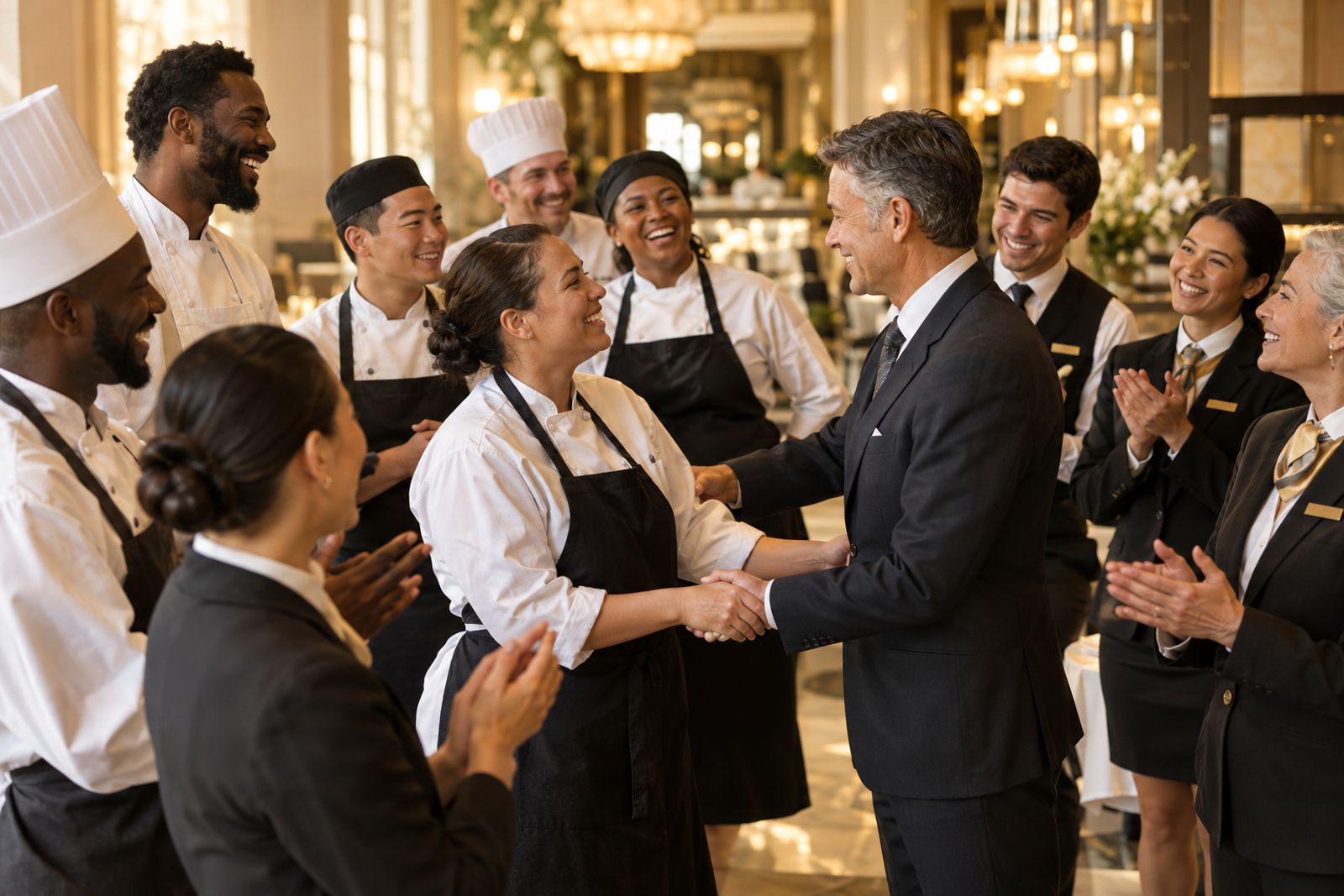
World-class hospitality leaders don’t just set the standard. They are the standard. They greet every team member with the same warmth they expect their team to extend to guests. They respond to service failures with the same grace they expect on the floor. They show up — emotionally, not just physically — every time they’re in the building.
Front-line teams are expert readers of leadership behavior. They know immediately when their leader is performing a standard versus living one. The performance, they can see through. The genuine article, they follow.
Trait 2: They Build Culture Proactively, Not Reactively
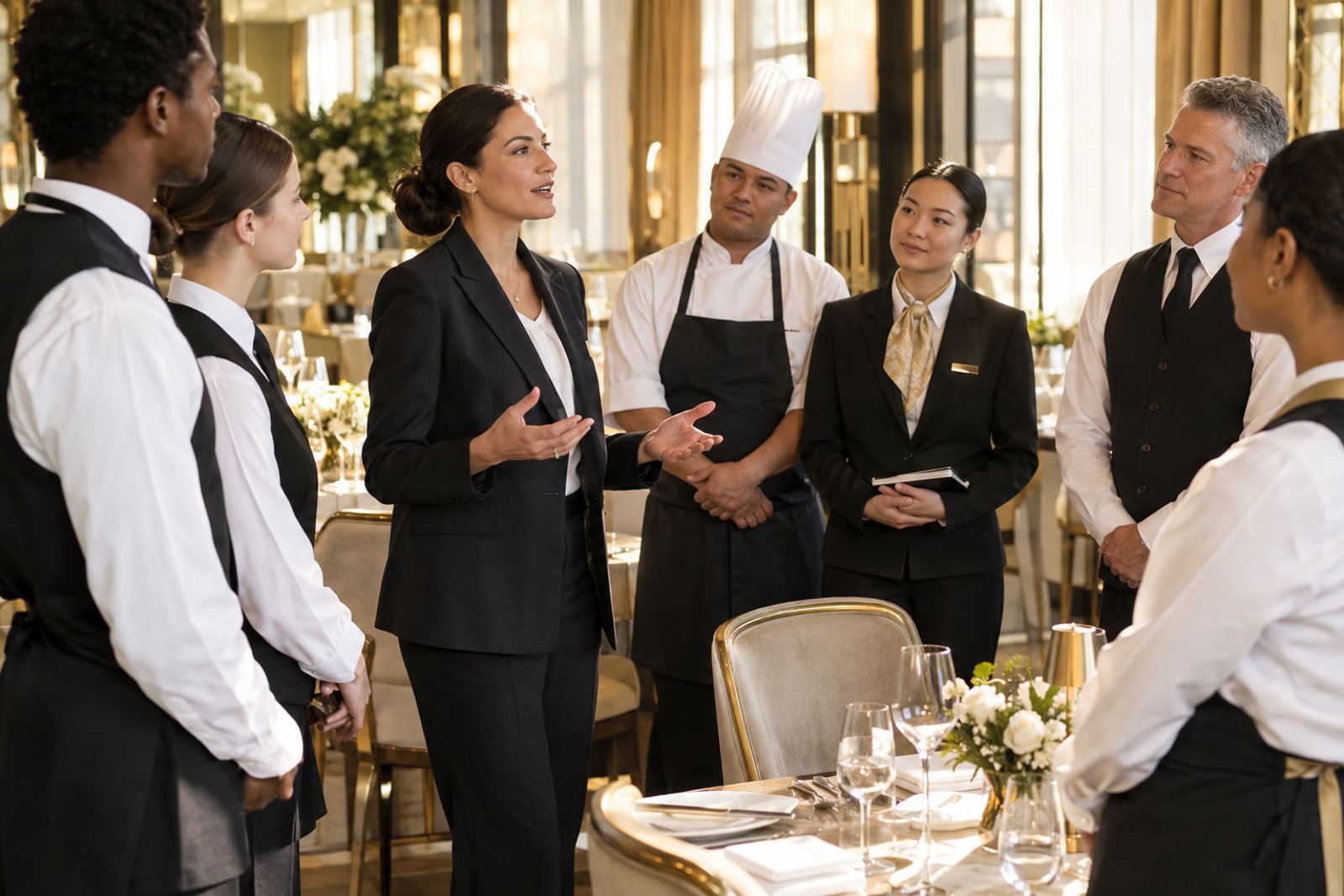
Average hospitality managers respond to culture when something breaks. World-class leaders build culture before anything breaks. They have daily rituals that reinforce values — the morning lineup that isn’t just operational but intentional, the recognition moment that isn’t just a checkbox but a genuine expression of what the team values.
Culture is built in the ordinary moments, not the extraordinary ones. The leaders who understand this invest in the daily rituals that compound over time into a team identity.
Trait 3: They Give Their Team Decision-Making Authority at the Point of Guest Contact
The Ritz-Carlton’s famous policy of empowering every employee with up to $2,000 to resolve a guest issue without manager approval isn’t just a policy — it’s a philosophy. It communicates that the guest experience is the responsibility of the person in front of the guest, not the manager back in the office.
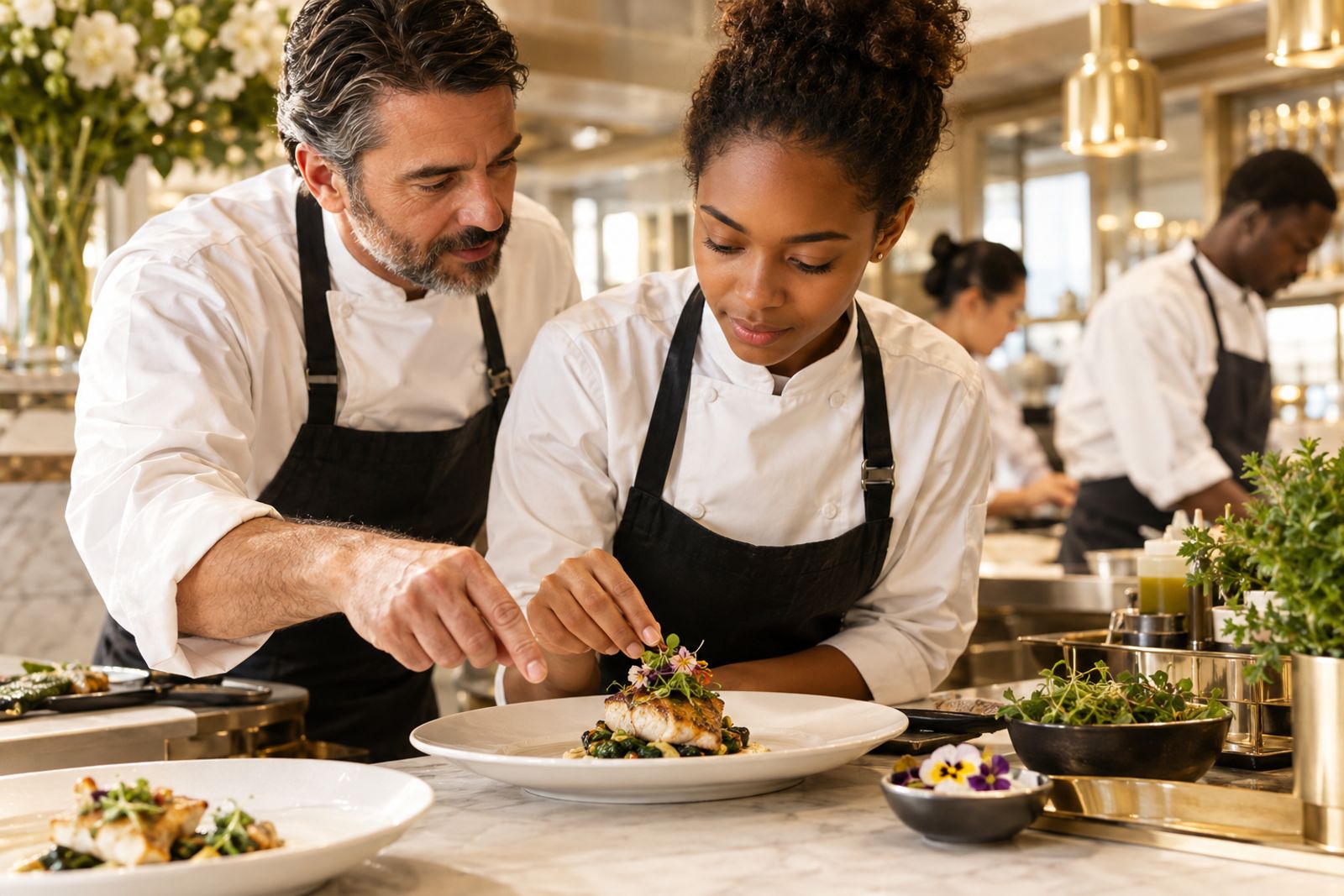
World-class hospitality leaders build this empowerment deliberately. They train their teams not just on what to do, but on how to think — so that when a situation arises that the manual doesn’t cover, the team member makes the right call because they’ve internalized the values.
Trait 4: They Are Students of the Guest Experience
The best hospitality leaders are perpetually curious about what guests actually experience. They read reviews — not to manage PR, but to understand what guests are trying to tell them. They ask their team what they’re observing. They walk the property through the guest’s lens regularly.
This curiosity is what separates leaders who are improving from leaders who are managing. The industry is changing, guest expectations are rising, and the leaders who stay close to the actual experience are the ones who stay ahead.
Trait 5: They Invest in People Before They Need to Retain Them
The hospitality industry has a staffing problem. But the leaders with the lowest turnover are not offering the highest wages — they’re offering the clearest sense of purpose, the most consistent recognition, and the strongest culture of belonging.
World-class leaders don’t start investing in their team when turnover spikes. They invest from day one, and they never stop. They know the names of their team members’ family members. They notice when someone is struggling. They celebrate wins publicly and handle corrections privately.
This isn’t soft leadership. It’s the hardest kind — and it produces the most durable results.
The Mindset That Separates Great From Average
More than any individual trait, world-class hospitality leaders share a core belief: that their job is to create the conditions for their team to succeed, and their team’s job is to create the conditions for guests to feel extraordinary.
This is a fundamentally different operating philosophy than managing task completion. It shifts the leader’s primary question from “Are my people following the process?” to “Do my people have everything they need to do their best work?”
When that becomes your primary question, everything changes — hiring, training, recognition, communication, and daily rituals all get redesigned around enabling rather than directing.
Final thought
Leadership is the root system of every guest experience. What guests feel in your lobby, at your tables, and across every touchpoint is a direct reflection of what your team feels working there.
The Hospitality Conference is where leaders who take that seriously come to sharpen their practice. Better Leaders. Stronger Teams. Unforgettable Guest Experiences.
Frequently asked questions
What makes a great hospitality leader?
Great hospitality leaders consistently model the standard they expect, build culture proactively through daily rituals, empower their teams to make decisions at the point of guest contact, and invest in their people before problems force them to. They lead from the belief that their job is to create conditions for their team — not to manage their behavior.
What skills are needed for hospitality leadership?
Key skills include emotional intelligence, cultural architecture, communication that inspires rather than just informs, the ability to coach in real time, and a genuine curiosity about the guest experience. Technical operational skills are necessary but not differentiating.
How is leadership in hospitality different from other industries?
In hospitality, the product is an emotional experience delivered by humans in real time. This requires leaders to invest deeply in culture, values alignment, and employee empowerment — dimensions that general business leadership frameworks underemphasize.
How do you develop hospitality leadership skills?
Developing hospitality leadership requires a combination of intentional modeling from above, exposure to the best operations in the industry, coaching that addresses culture-building and not just task management, and consistent reflection on the guest and employee experience.
What is the biggest challenge in hospitality leadership today?
The most persistent challenge is building and retaining engaged teams in a high-turnover industry. The leaders who solve this do so not primarily through compensation but through culture — creating environments where team members feel genuinely valued, purposeful, and empowered.

Greg Atkinson
Greg Atkinson is the Founder of The Hospitality Conference, the First Impressions Conference, and SpeakerSync. He has spent more than three decades helping leaders create welcoming, unforgettable guest experiences.