A culture of hospitality cannot be trained after the fact — it must be built before the guest arrives, through hiring decisions, daily rituals, leadership modeling, and systems that reinforce the values the organization claims to hold. Culture is the invisible infrastructure that determines what guests actually experience when your team is on their own.
The Culture Problem That Training Can’t Fix
Every hospitality leader has experienced this: you invest in a service training program, and for three weeks, the team is sharper, warmer, more attentive. Then, gradually, things drift back to where they were.
This is not a training problem. It’s a culture problem.
Training can teach skills. Training can introduce frameworks. Training can temporarily shift behavior. But training cannot install values — and values are what drive behavior when no one is watching, when the floor is slammed, when a difficult guest is on the phone at 11 PM.
Culture is what happens when leadership isn’t in the room. And building the right culture — one where hospitality is an expression of who your team is, not a behavior they perform — is the most important and most underinvested work in the industry.
Why “Culture” Isn’t a Soft Topic
There’s a tendency in hospitality operations to treat culture as the soft side of the business — the thing HR talks about before you get to the real agenda. This is a category error that costs organizations millions in turnover, lost guest loyalty, and brand erosion.
Culture is the mechanism by which your values become your guest’s experience. Without a strong culture, you are entirely dependent on individual personalities on any given shift — which means your guest experience varies with your roster.
With a strong culture, the new hire absorbs the standard by being immersed in it. The closing team maintains the standard because they’ve internalized why it matters, not because someone is watching. The team member facing a service failure knows exactly what to do because the values are clear, and the empowerment is real.
The Culture-First Hospitality Model
The Culture-First Hospitality Model is THC’s framework for building hospitality into the DNA of your team — before the guest arrives, not in response to what guests experience.
The model operates across four domains: Foundations, Daily Practice, Leadership, and Systems.
Domain 1: Foundations — What Your Culture Is Built On
Values That Are Lived, Not Laminated
Every hospitality operation has values posted somewhere — on the website, in the employee handbook, on a plaque in the back of house. Most of those values have no operational reality. They’re aspirational marketing that the team has learned to tune out.
The difference between decorative values and living values is the degree to which leadership makes decisions based on them. When a manager uses a core value to explain why they handled a guest situation a certain way, the value becomes real. When a team member hears it explained as the reason, not just the rule, it becomes theirs.
Start by identifying the three to five values that you actually want to run your operation on — the ones you’re willing to hire for, fire for, and reference daily. Fewer, deeper values produce stronger culture than long lists that nobody remembers.
Hiring for Culture Fit Is Not Optional
Every hire that violates your culture is a culture tax you’ll pay for months. A technically skilled employee who doesn’t genuinely care about guests will teach every new hire they work with that not caring is acceptable. Culture is transmitted person to person — and the wrong person transmits the wrong culture.
Build your hiring process to assess values before skills. Ask behavioral questions that reveal how candidates treat people who can’t do anything for them. Check references not for performance validation but for culture signals.
Domain 2: Daily Practice — How Culture Stays Alive
The Power of Ritual
Culture is maintained through repetition. The organizations with the strongest cultures — from the Ritz-Carlton to the Navy SEALs — all share a common feature: daily rituals that reinforce the values before the work begins.
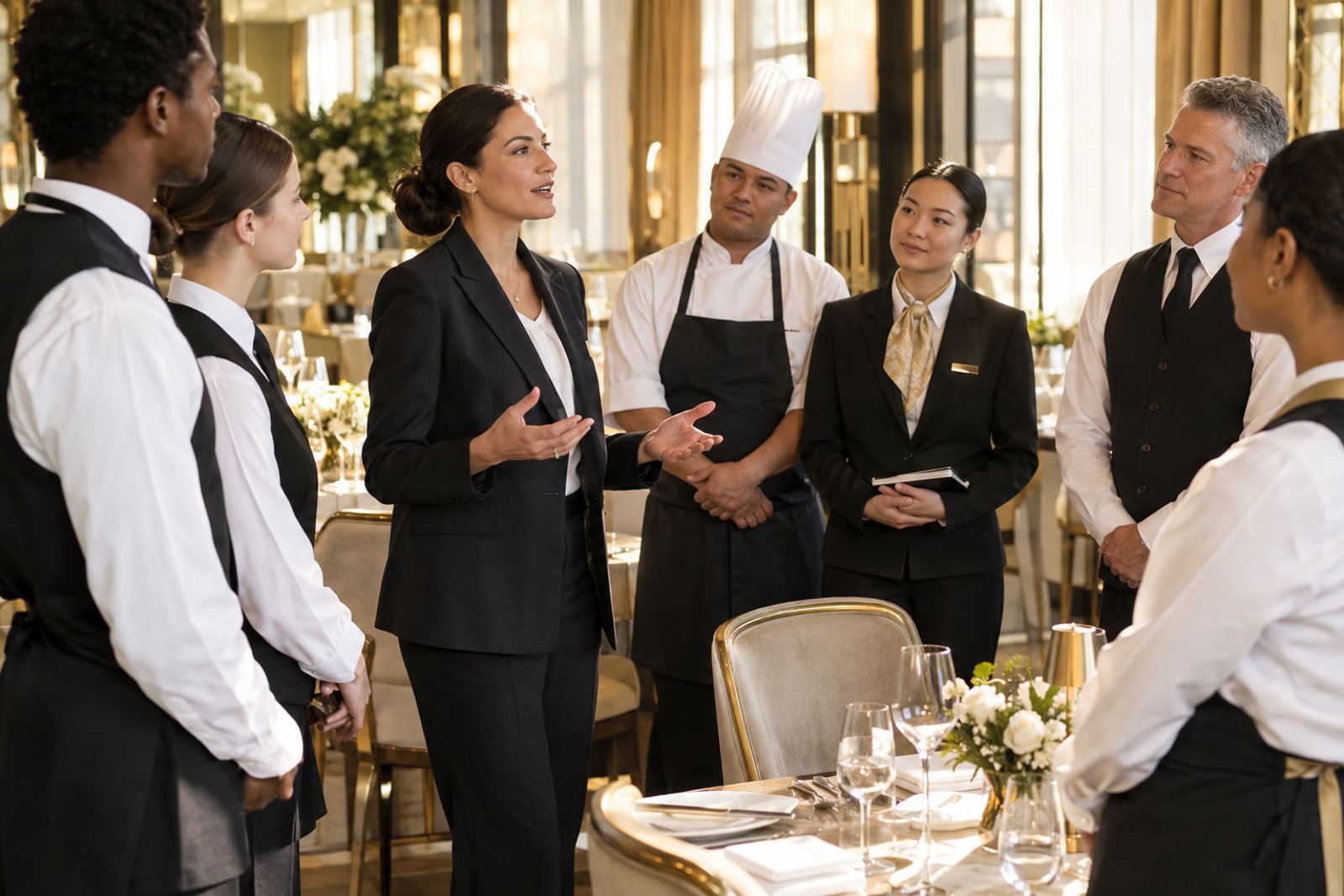
For hospitality operations, this means a pre-shift ritual that is explicitly cultural: a story that celebrates the values in action, a brief discussion of what the team is trying to achieve that day for guests, a moment of recognition. Ten minutes. Every day. Not a scheduling meeting with a values checkbox at the end — a genuine cultural moment before the doors open.
Recognition That Reinforces the Right Things
What you celebrate publicly is what your culture amplifies. If your recognition system rewards compliance and efficiency — the employee who was never late, the server with the highest table turns — you will build a culture of compliance and efficiency.
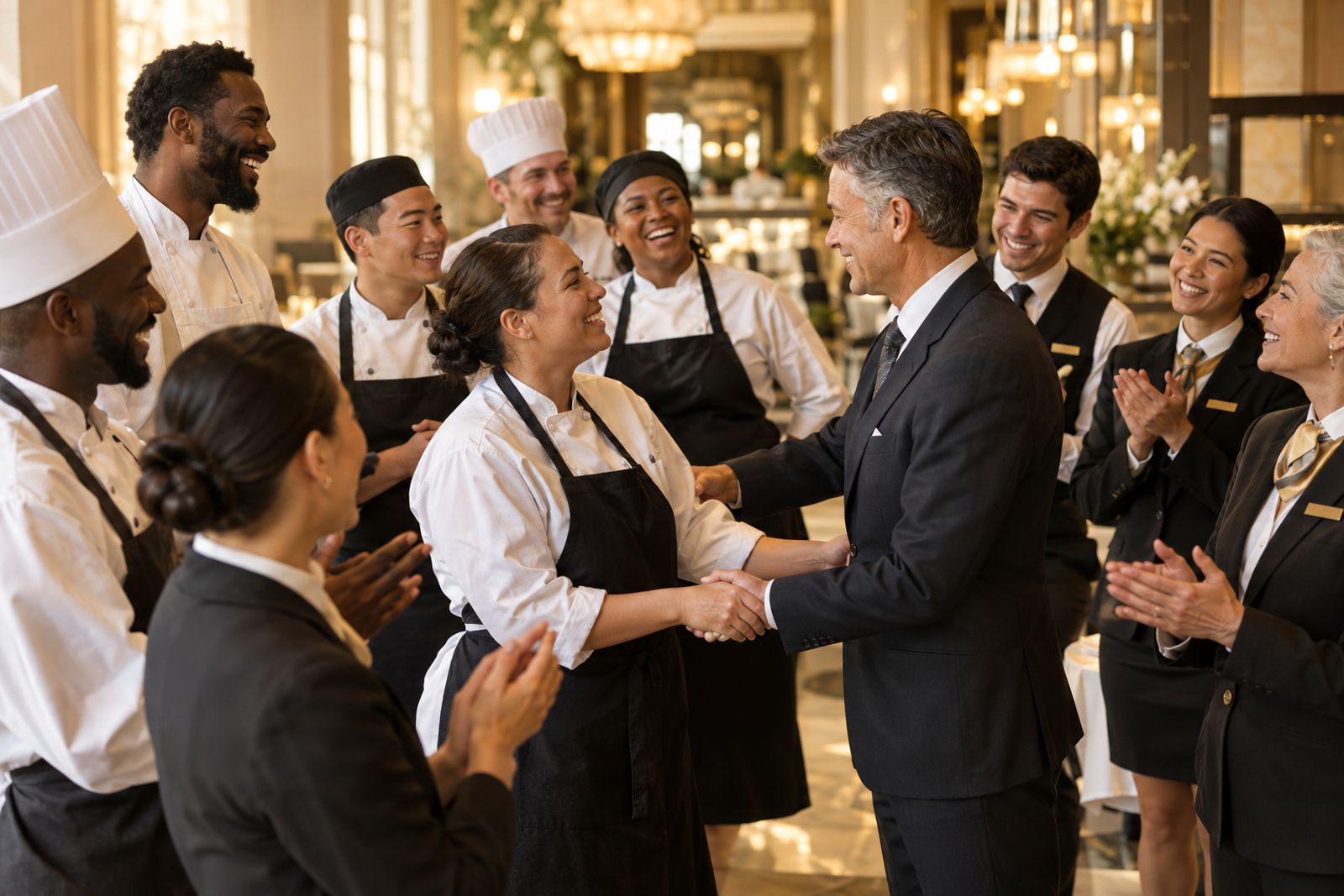
If your recognition system celebrates the moment a team member went out of their way for a guest, stayed late to ensure a service failure was resolved, or found a creative solution to an unusual request — you will build a culture where those behaviors are aspirational.
Design your recognition system around the values, not around the operational metrics.
Domain 3: Leadership — The Culture Multiplier
You Are the Most Powerful Culture Signal in the Room
Every behavior a leader exhibits teaches the team what the culture actually tolerates, regardless of what the values statement says. The manager who walks past a guest in distress teaches the team that it’s acceptable to do the same. The leader who stops everything to resolve a guest issue teaches that guests are the priority.
Leadership modeling is not optional, and it is not part-time. Every interaction a leader has — with guests, with team members, in back of house — is a culture signal. The question is whether those signals are intentional or not.
The Feedback Loop That Builds Culture
The leaders who build the strongest cultures are those who create feedback loops that surface cultural signals from the front line. Regular one-on-ones that ask not just about performance but about what the team member observes in the guest experience. Open channels for team members to raise cultural concerns without fear of consequence. A genuine interest in what’s actually happening at the point of guest contact.
Culture cannot be built from the top down alone. It has to be informed by what’s happening at the front — and leaders who stay connected to that reality build cultures that are both aspirational and grounded.
Domain 4: Systems — Infrastructure That Supports Culture
Systems That Reinforce or Undermine
Every operational system either supports or undermines your culture. Scheduling systems that chronically understaff the most guest-intensive periods communicate that efficiency is more important than guest experience. Recovery policies that require multiple manager approvals for a simple guest compensation communicate that the organization doesn’t trust its team.
Conduct a cultural audit of your systems: Do your systems empower your team to deliver on the culture you say you want? Or do they create friction that forces team members to choose between following the process and doing the right thing?
Onboarding as Culture Installation
The first 30 days of a new team member’s experience are the most powerful culture transmission window you have. What they observe, what they’re told, and what they experience in that window will shape their behavior for the rest of their tenure.
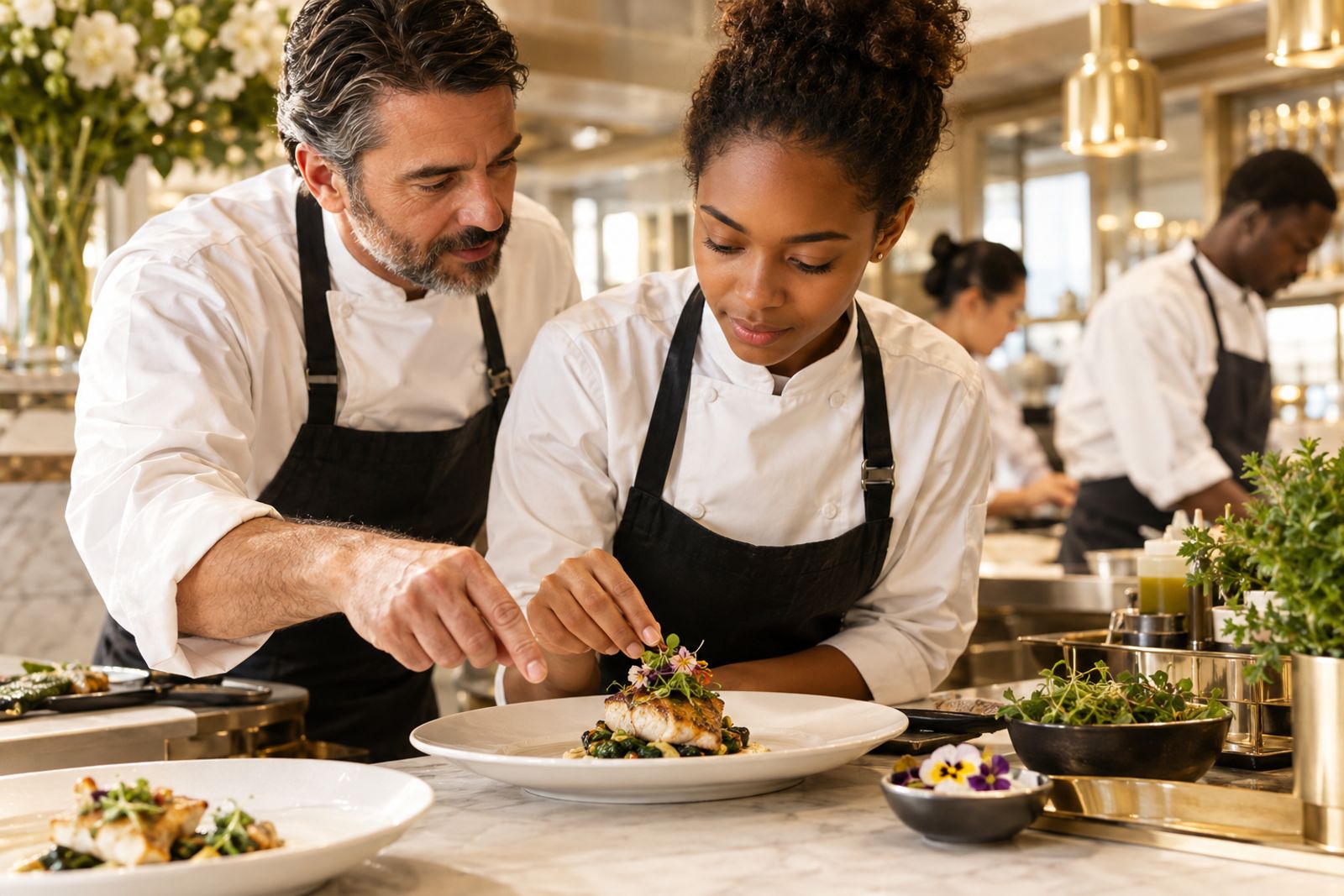
Design onboarding explicitly around culture: the values and why they matter, stories that bring the culture to life, direct time with leaders who model the standard. Don’t save culture for after the operational training — make it the first thing.
Final thought
Culture isn’t built in a training room. It’s built in every hiring decision, every shift briefing, every service recovery, every recognition moment, and every choice a leader makes when the situation is ambiguous and the easy thing and the right thing are not the same.
The leaders who invest in culture before investing in amenities are the ones who build teams that make guests feel something. That’s the work The Hospitality Conference exists to support. Better Leaders. Stronger Teams. Unforgettable Guest Experiences.
Frequently asked questions
What is a culture of hospitality?
A culture of hospitality is an organizational environment where genuine care for guests and colleagues is a deeply held value — expressed through daily behaviors, systems, and leadership modeling — rather than a set of trained scripts. It exists before the guest arrives and continues after they leave.
How do you build a positive culture in hospitality?
Building a positive hospitality culture requires aligned hiring, daily rituals that reinforce values, leadership that consistently models the standard, recognition systems that celebrate the right behaviors, and operational systems designed to empower rather than restrict the team.
Why is culture important in hospitality?
Culture is the mechanism that converts your values into your guests’ experience. In the absence of strong culture, guest experience is determined by the personalities on any given shift. Strong culture means the standard is consistent regardless of who is working — because the values are internalized, not just enforced.
What is the difference between service culture and hospitality culture?
Service culture focuses on the execution of processes and tasks that meet guest needs. Hospitality culture goes deeper — it builds a belief that caring for people is not a job function but a purpose. Service culture produces compliance; hospitality culture produces genuine warmth that guests can feel and don’t forget.
How long does it take to build a hospitality culture?
A visible culture shift can begin within 90 days when leadership makes deliberate changes to daily rituals, hiring standards, and recognition systems. A genuine cultural transformation — one that is self-sustaining and survives leadership transitions — typically requires 12–24 months of consistent investment.

Greg Atkinson
Greg Atkinson is the Founder of The Hospitality Conference, the First Impressions Conference, and SpeakerSync. He has spent more than three decades helping leaders create welcoming, unforgettable guest experiences.